
How oral immunotherapy works
Oral immunotherapy, or OIT, is a treatment approach that uses carefully measured amounts of a food allergen to help the immune system become less reactive over time. The goal is not to erase the allergy, but to raise the reaction threshold and reduce the risk of a severe reaction after accidental exposure.
What OIT is designed to do
The main purpose of OIT is to help a patient tolerate a larger amount of the food before reacting than they could before treatment. That can make accidental exposure less dangerous, but it does not mean the food allergy is gone or that patients can automatically eat the food freely without guidance.
This distinction matters. Many families hear the word "treatment" and assume it means a cure. OIT is better understood as a structured desensitization process that may improve safety and quality of life when it is used in the right patient, with the right expectations.
How treatment usually begins
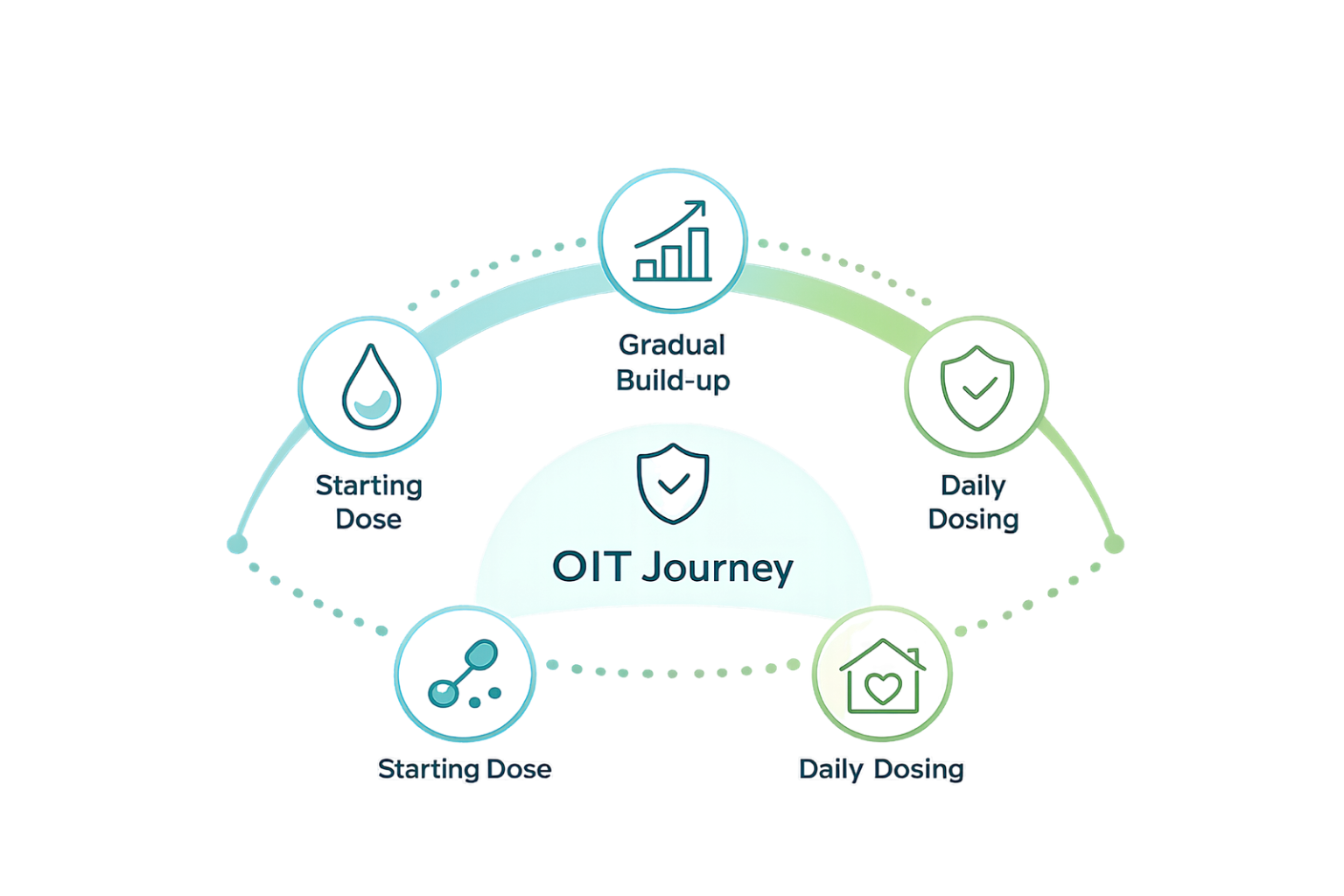
OIT generally starts with a careful evaluation and confirmation of the allergy. Once a patient is accepted into treatment, very small doses of the allergenic food are introduced under medical supervision.
The dose is then increased gradually over time, rather than all at once. That slow progression allows the care team to monitor tolerance, respond to symptoms if they occur, and decide when it is appropriate to move forward.
What the maintenance phase means
After the dose-building phase, patients usually continue taking a regular maintenance dose. This stage is important because the benefit of OIT often depends on ongoing, consistent exposure rather than a one-time treatment period.
Maintenance can be one of the most important parts of family counseling because it affects real life. Daily or regular dosing can be demanding, and families should understand early on that success is not just about reaching a target dose, but about whether the treatment plan remains safe, realistic, and sustainable over time.
What families should realistically expect
OIT can be highly meaningful for some patients, but it is not effortless care. Dosing consistency, follow-up visits, observation after doses, and attention to symptoms all matter. Some patients do very well, while others find the daily burden or side effects harder than expected.
That is why education matters as much as the protocol itself. Families need a clear picture of what treatment asks from them, what the goals are, and how progress will be measured along the way.
What treatment typically involves
Treatment progresses gradually over time
Daily dosing helps maintain progress
Regular follow-up visits are important
Long-term family commitment matters


Want to explore whether OIT makes sense?
Schedule a consultation to learn how oral immunotherapy works, what treatment involves, and whether it matches your child’s needs and your family’s goals.
Request a consultation